For marketers, ecommerce companies and service businesses, this creates an interesting new advertising opportunity. It also requires a different mindset. Successful campaigns still need good creative, relevant landing pages and accurate conversion tracking, but advertisers now need to think beyond keywords and consider the conversations that happen before a customer buys.
As a web designer and digital specialist, I find this particularly interesting because ChatGPT Ads brings together areas that have traditionally been treated separately: website design, paid advertising, AI, ecommerce, analytics and marketing automation.
What this guide covers
- What ChatGPT Ads are
- Why conversational advertising is different
- Campaign structure and objectives
- Context hints and conversational intent
- Creative best practices
- Landing pages
- Ecommerce and product discovery
- Marketing automation
- Conversion measurement
- ChatGPT Ads vs other channels
- Sponsored Agents and integrations
- How businesses can prepare

What Are ChatGPT Ads?
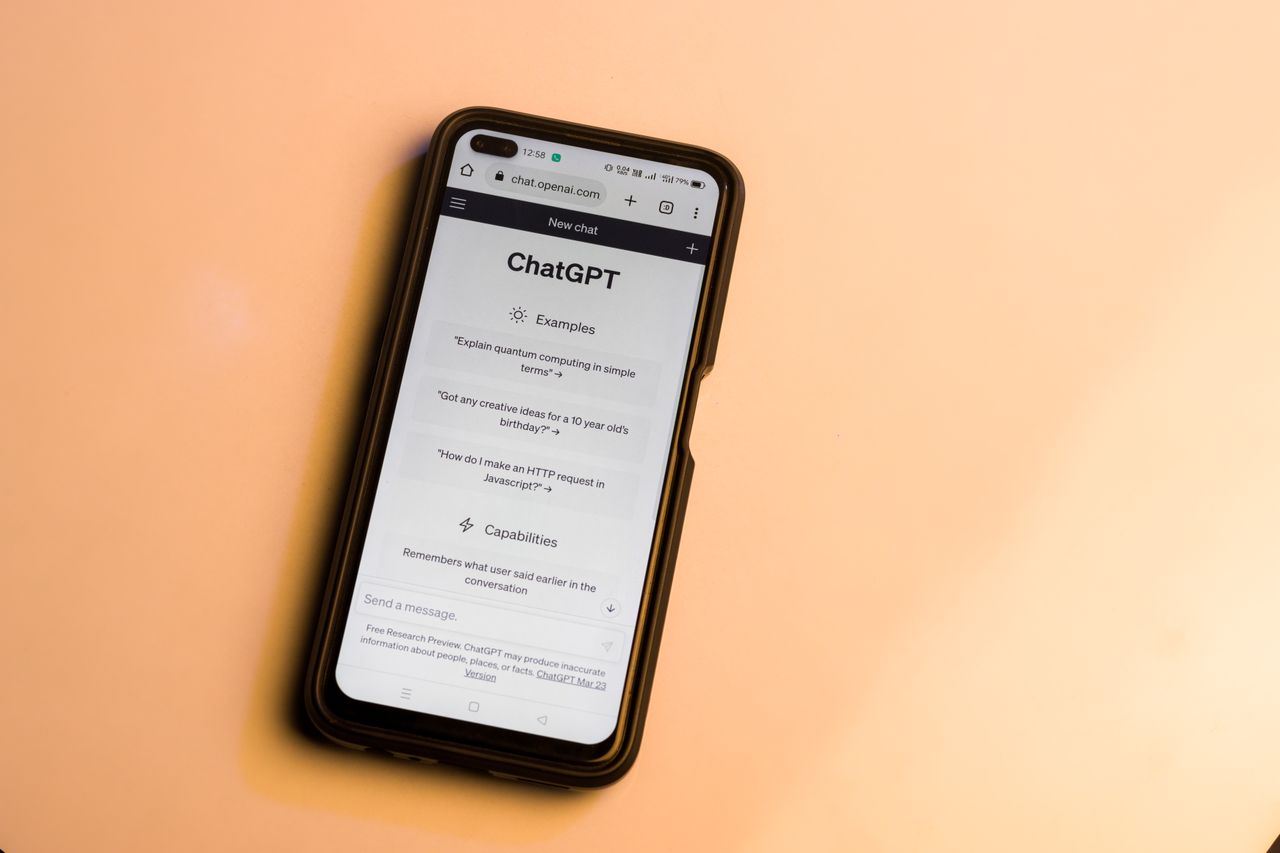
ChatGPT Ads are paid advertisements displayed separately from ChatGPT's answers. OpenAI describes the opportunity as helping advertisers reach people while they explore options, compare choices and make decisions. An ad can include an advertiser name, logo or favicon, title, descriptive copy, landing page and image creative.
The separation between advertising and the assistant's answer is important. An advertiser is paying for an advertising placement rather than paying to alter the independent response generated by ChatGPT. Maintaining that distinction is fundamental to user trust.
People use ChatGPT for many commercially relevant activities. They might research software, compare products, plan a holiday, investigate a home improvement, choose an ecommerce platform or look for a professional service. The advertising opportunity sits around those moments of exploration and decision-making.
Why Conversational Advertising Is Different
Traditional paid search is strongly associated with keywords. Someone might search for web designer Leamington Spa. That query communicates location and a service requirement, but little else.
A ChatGPT conversation might instead say: “I've recently started a consultancy in Leamington Spa. I built the website myself, but it looks dated and I am struggling to appear in Google. I want somebody local to redesign it without losing the content and rankings I already have.”
That single conversation contains several layers of intent: a business owner, an existing website, a redesign requirement, an SEO concern, a location preference and potential commercial intent.
For somebody offering web design in Leamington Spa, the broader situation is far more useful than simply knowing that the phrase “web designer” appeared.
This creates a useful shift in marketing thinking. Instead of only asking what does my customer search for?, businesses should also ask what is my customer likely to be discussing immediately before my product or service becomes useful?
How ChatGPT Ads Campaigns Are Structured
The overall structure will feel familiar to marketers who have worked with other advertising platforms. OpenAI's Ads Manager Beta uses campaigns, ad groups and ads.
Campaign
Defines the overall objective, budget, dates and supported targeting settings.
Ad Group
Organises related ads around a shared service, product, theme or customer need.
Ad
The creative shown to users, including the title, copy, image and destination.
The important addition is the context hint. At ad-group level, advertisers can provide information that helps explain what they offer, who it helps and situations where it may be relevant.
This means campaign structure should reflect genuine differences in customer needs. A company should not automatically put every service into one ad group simply because they share a brand. My own services, for example, could logically separate website design, ecommerce development, marketing automation and specialist integrations because the customer situations are substantially different.
ChatGPT Ads Campaign Objectives
OpenAI currently supports objectives around views, clicks and conversions. The objective matters because it determines how the campaign is optimised and the relevant billing approach.
| Objective | Goal | Typical Use |
|---|---|---|
| Views | Visibility and exposure | Awareness, launches and brand campaigns |
| Clicks | Website or product traffic | Sending people to a relevant landing page |
| Conversions | Downstream actions | Purchases, registrations and lead submissions |
Views campaigns use impression-based buying, while click campaigns focus on valid clicks. Conversion-optimised campaigns can optimise towards supported conversion events using available billing options.
The correct objective depends on the commercial goal. A new brand might care about exposure. A professional service may care about qualified enquiries. An established online retailer is likely to care much more about completed purchases and profitable acquisition.

Context Hints: Moving Beyond Keywords
Context hints are one of the most distinctive aspects of ChatGPT Ads. OpenAI describes them as additional details about a business, product or service that help its systems understand when an ad may be relevant.
What?
Features, services, pricing, availability or other relevant offer details.
Who?
The customer needs, preferences or circumstances the offer genuinely suits.
When?
The situations or decisions where the product or service becomes useful.
A weak hint might simply say “website design”. A more useful hint could describe website redesign for established businesses that need a modern WordPress website while preserving existing SEO visibility. It adds a situation, customer type and requirement.
Similarly, an automation consultancy should think beyond “Zapier expert”. Relevant situations could include connecting website leads to a CRM, sending automated appointment reminders, synchronising customer records or reducing repetitive data entry.
If those are the kinds of workflows your company needs, my Zapier expert services and wider marketing automation services cover the practical systems that can sit behind a marketing campaign.
Context hints are not exact-match keywords or guaranteed delivery instructions. The aim is to add useful relevance information rather than force an advertisement into a particular conversation.
Think About Problems Before Products
This change from keywords towards conversational intent could influence customer research. Consider an ecommerce company selling ergonomic office furniture. Traditional paid-search planning might focus on ergonomic office chair, office chair UK, standing desk and best home office chair.
Conversational contexts might include somebody setting up a first home office, an employer equipping remote workers, a person trying to improve a small workspace or a business redesigning an office. The product has not changed. What changes is the advertiser's understanding of the circumstances that create demand.
Creating Better ChatGPT Ad Creative
Advertising inside a conversational interface does not remove the need for strong copy. If anything, relevance becomes more important because the user may already have spent several minutes thinking carefully about the problem.
OpenAI recommends clear, specific and benefit-focused messaging. Creative variations should also be genuinely distinct rather than five versions of the same headline.
Generic
Transform Your Business Today
Innovative solutions for modern businesses.
Specific
Automate Repetitive Lead Admin
Connect your forms, CRM and email tools to reduce manual data entry.
The second version explains both the problem and practical value. That becomes particularly important when the user already has substantial context from the conversation.
Images should follow the same principle. Product photography, an interface preview or a visual clearly connected to the service is generally more useful than abstract imagery that communicates little.
Build Creative Around Different Customer Motivations
An ecommerce development campaign could test different motivations rather than superficial headline changes. One ad could focus on launching a new store. Another could focus on migrating from an unsuitable platform. A third could focus on improving conversion rates. A fourth could address an outdated design.
All four can promote the same underlying ecommerce website design service, while addressing genuinely different customer situations.
Landing Pages Matter as Much as the Advertisement
A common advertising mistake is obsessing over the ad while neglecting the page somebody reaches after clicking it.
Imagine a person has spent ten minutes explaining their requirements to ChatGPT. They have compared alternatives, considered trade-offs and clarified what they need. They click an advertisement and land on a generic homepage saying “Welcome. We provide innovative solutions.” The journey immediately loses relevance.
A stronger landing page continues the conversation. It should make clear that the visitor has reached something relevant to the exact problem they were researching.
- Use a headline aligned with the advertisement.
- Explain the specific problem and solution.
- Communicate practical benefits rather than generic claims.
- Include relevant products or service information.
- Add case studies, reviews and trust signals.
- Provide pricing guidance where appropriate.
- Answer common questions.
- Make the next step obvious.
This is where website quality becomes inseparable from advertising performance. Paying for more traffic will not fix a confusing website. It simply sends more people into the confusion.
Businesses preparing for AI advertising should therefore review their website before increasing advertising spend. My website design and digital services focus on the combination of design, user experience, SEO, performance and conversion rather than treating a website as a purely visual project.
What Could ChatGPT Ads Mean for Local Businesses?
Conversational advertising is not only relevant to national ecommerce brands. Local services could benefit when somebody's conversation includes genuine geographic intent.
A business owner might discuss finding a designer nearby, replacing an outdated website, improving local SEO or deciding whether to hire an agency or freelancer. A relevant local service could potentially become useful at that stage.
For businesses around Warwickshire, this makes the relationship between advertising, local relevance and the website particularly important. A campaign might generate the click, but the landing page still needs to demonstrate local credibility, relevant work and a clear service.
My Leamington Spa web design service is an example of a location-focused page that could support both organic discovery and targeted advertising.
ChatGPT Ads and Ecommerce
Ecommerce may become one of the most interesting applications of conversational advertising because product discovery frequently involves detailed requirements.
Compare “waterproof jacket UK” with: “I need a lightweight waterproof jacket for walking in Scotland in October. My budget is around £150 and I would prefer a sustainable brand.” The second interaction communicates use case, season, budget, product characteristics and brand preference.
For ecommerce companies, that increases the importance of accurate product data. Names, descriptions, prices, availability, imagery and categories all need to be useful and consistent. OpenAI supports product-feed campaign workflows, providing another reason to treat catalogue data as a marketing asset rather than merely information displayed on a product page.
If you are building or redesigning the store itself, my ecommerce website design services cover platforms, usability, product architecture and the wider customer journey behind paid acquisition.
ChatGPT Ads and Marketing Automation
The advertisement is only the beginning. For many service businesses, the real opportunity comes from connecting acquisition to a reliable follow-up process.
A relevant ad appears
The person is already researching or comparing something connected to the offer.
They visit a focused landing page
The page continues the same message and provides evidence and a clear action.
They submit an enquiry
The form captures enough information for a useful sales response.
Automation handles the next steps
The lead can enter a CRM, create a sales task, trigger an email and update internal records.
The team follows up quickly
Sales receives useful context rather than manually copying information between disconnected systems.
This is why advertising and automation should not be considered completely separate. If a campaign doubles lead volume but the internal process cannot handle those leads, much of the opportunity is lost.
A marketing automation agency can help connect the website, CRM, email, spreadsheets and other business tools into a more reliable workflow. For application-to-application integrations, my Zapier expert services focus on reducing repetitive manual processes.

Conversion Tracking: Measure What Happens After the Click
Clicks alone do not tell you whether a campaign is commercially successful. A campaign producing 1,000 inexpensive clicks but no enquiries can be less valuable than one producing 100 highly relevant visits and 15 qualified leads.
OpenAI's conversion measurement supports measuring actions after advertising interactions through supported data sources such as the OpenAI Pixel and Conversions API. Useful conversion events can include purchases, lead submissions and registrations.
OpenAI also notes that its reporting and third-party analytics may not always show identical totals. Differences can occur because of attribution methods, time zones, consent conditions, browser behaviour, deduplication, event configuration and modelling.
Privacy, Suitability and User Trust
Conversational AI creates an unusual advertising environment because people may discuss their needs in more depth than they would through a conventional search box. That makes user trust particularly important.
Ads need to remain distinguishable from the assistant's response, and OpenAI's policies restrict advertising around sensitive and unsuitable contexts. For marketers, the lesson is that the objective should not be to force an advertisement into every possible conversation. Relevance, appropriateness and accuracy matter.
ChatGPT Ads vs Google Ads
It is tempting to frame ChatGPT Ads as a direct replacement for Google Ads, but the platforms are used differently. Search advertising captures enormous volumes of explicit query intent. ChatGPT can contain richer conversational context around a decision.
| Area | Traditional Search Ads | ChatGPT Ads |
|---|---|---|
| User behaviour | Often short search queries | Potentially detailed conversations |
| Intent | Keywords and search behaviour | Conversation context and supported relevance signals |
| Discovery | Search results and shopping | Research, comparison and decisions |
| Creative | Built around queries and audiences | Designed to be useful in conversational context |
| Landing pages | Important | Critical for maintaining relevance after the conversation |
Businesses may ultimately use both. A customer could discover a category through ChatGPT, later search for the company through Google, read reviews and eventually return directly to purchase. Attribution will therefore remain a multi-channel challenge.
ChatGPT Ads vs Social Advertising
Social advertising frequently reaches people while they browse content, watch videos or interact with a network. ChatGPT is different because the user is often trying to accomplish something specific: solve a problem, understand a subject or choose between alternatives.
That could make conversational advertising particularly interesting for software, professional services, higher-consideration ecommerce products, technology, home and business services, and other purchases where research matters.
Sponsored Agents: Where AI Advertising Could Go Next
OpenAI announced Sponsored Agents in September 2026 as a new advertising experience being tested. The idea is that somebody can start a conversation with a business-sponsored agent after interacting with an ad.
This suggests a future where the advertisement itself becomes interactive. Instead of a simple ad-to-website journey, some experiences could involve an ad, a sponsored agent, follow-up questions and then a recommendation or action.
For businesses, this raises interesting possibilities around product selection, lead qualification and customer service. It also reinforces the importance of accurate information and reliable systems behind the advertising experience.
Shopify, HubSpot and Connected Advertising
OpenAI has also announced new integrations involving Shopify and HubSpot. The significance goes beyond those two platforms. Advertising becomes more useful when it connects with the systems businesses already use.
Ecommerce companies need product and purchase data. Service businesses need CRM and lead workflows. Marketing teams need measurement and follow-up. Over time, AI advertising is likely to become less isolated from the rest of the technology stack.
This is another reason I view marketing automation as part of the wider marketing strategy rather than an optional technical extra. The more channels a business operates, the more valuable reliable data flow becomes.
ChatGPT Ads and Sustainable Digital Marketing
There is another side to the growth of AI-driven advertising: digital efficiency. More advertising channels often result in more landing pages, tracking scripts, integrations, analytics tools and technology. Businesses should avoid assuming that more software automatically produces better marketing.
Efficient websites, sensible tracking and carefully chosen technology can improve performance while reducing unnecessary complexity. I explore the broader relationship between performance, hosting and environmental impact in my article about working with a sustainable web design agency.
How Businesses Can Prepare for ChatGPT Ads
You do not need to move an entire advertising budget into a new channel immediately. A better approach is to make sure the fundamentals are ready before testing.
Audit your website
Review mobile usability, speed, messaging, trust signals, forms and calls to action.
Map customer conversations
Write down the questions and situations that occur before somebody needs your product or service.
Improve landing pages
Create pages that continue the promise made by each campaign rather than sending every visitor to a generic homepage.
Define conversions
Decide what a commercially meaningful action is and make sure it can be measured.
Connect follow-up
Make sure leads and purchases flow into the appropriate CRM, email, sales or fulfilment processes.
Test distinct creative
Create genuinely different value propositions around customer needs.
Start with controlled testing
Evaluate lead quality, conversion rate and commercial outcomes before making major budget decisions.
Five Practical ChatGPT Ads Best Practices
1. Choose a meaningful objective
Structure each campaign around the business result you actually want.
2. Think conversationally
Understand the circumstances and questions that make your offer relevant.
3. Use specific context hints
Add useful information about what you offer, who it helps and when it matters.
4. Diversify creative
Test distinct benefits and motivations rather than superficial variations.
5. Measure downstream results
Track purchases, enquiries and registrations rather than clicks alone.
Bonus: connect the journey
Use automation so advertising leads flow into a reliable follow-up process.
Will ChatGPT Ads Replace Existing Marketing Channels?
Probably not in the simple sense of one channel replacing another. Customers rarely operate in perfectly isolated funnels. Somebody might discover a problem through social media, research it with ChatGPT, visit several websites, search a company name on Google, read reviews and then return directly to purchase.
The more useful question is whether ChatGPT becomes an important additional point in that journey. If people increasingly use conversational AI to make decisions, advertising is likely to follow that behaviour.
Frequently Asked Questions About ChatGPT Ads
What are ChatGPT Ads?
Can advertisers pay ChatGPT to recommend their company?
What are context hints?
Can ChatGPT Ads track conversions?
Are ChatGPT Ads useful for ecommerce?
Do I need a dedicated landing page?
How should a small business approach ChatGPT Ads?
The Bigger Picture: Advertising Is Moving From Keywords to Conversations
Search advertising taught marketers to understand keywords. Social advertising taught them to understand audiences and creative. Conversational AI adds another layer: contextual intent expressed through natural conversation.
That does not make keywords irrelevant. It means marketers have another source of information about what customers are trying to accomplish. Businesses that adapt well may be those that understand the questions customers ask before buying, create useful landing pages, maintain accurate product and service information, and connect advertising to reliable internal systems.
That is also why the website remains central. Whether a visitor arrives from Google, ChatGPT, social media, email or another source, the website is often where credibility is established and action takes place.
If you are reviewing that wider digital foundation, explore my web design and digital services, including ecommerce website development, marketing automation and Zapier integrations.
Final Thoughts: Should Businesses Test ChatGPT Ads?
ChatGPT Ads is still a developing advertising environment, which means businesses should approach it with curiosity, testing and measurement rather than assumptions.
The opportunity is compelling because ChatGPT is frequently used at moments when people are actively researching, exploring alternatives and trying to make decisions. Those are commercially valuable moments.
But simply being present is not enough. Successful campaigns will still depend on the fundamentals: a relevant offer, accurate information, useful creative, strong landing pages, reliable conversion measurement and an effective process after the lead or sale arrives.
The biggest conceptual shift may be moving from thinking exclusively about what somebody searches for towards understanding what somebody is trying to achieve.
As AI assistants become a more established part of product research and business decision-making, that distinction could become increasingly important.
Preparing Your Website & Marketing for AI Advertising
If ChatGPT Ads becomes part of your marketing strategy, the campaign itself is only one piece of the puzzle. Your website, landing pages, conversion tracking and follow-up automation all need to work together.
I help businesses build and improve that wider digital journey through website design, ecommerce development and marketing automation.
Explore My Services →Marketing Automation →