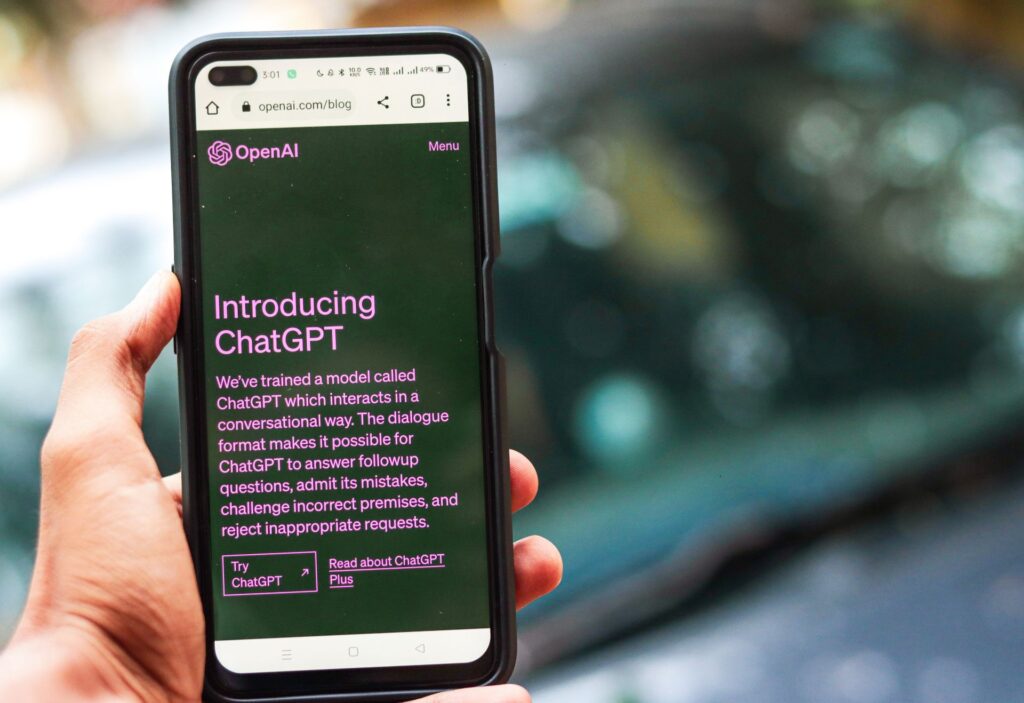
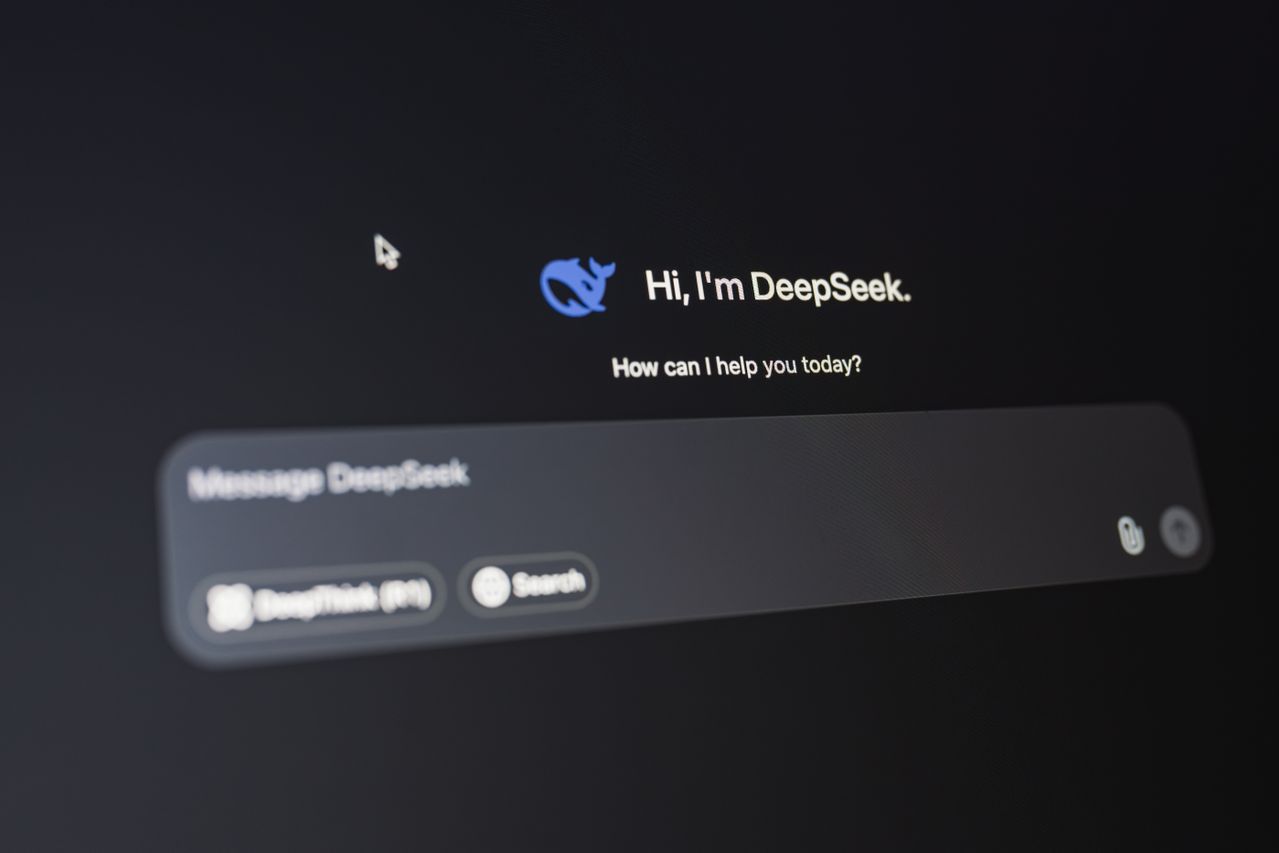
Search is changing. For years, website optimisation has focused mainly on earning visibility in Google and Bing. Today, customers can also discover businesses, products and information through ChatGPT, Microsoft Copilot, Google's AI-powered search experiences and other generative AI tools.
That does not mean traditional SEO is dead. Many of the fundamentals that make a website useful to search engines also make it easier for AI systems to discover, understand and reference. The difference is that businesses now need to think beyond rankings and blue links. Your content may increasingly appear as a source or citation inside an AI-generated answer.
This guide explains how to optimise your website for ChatGPT and AI search, covering crawlability, content, structured data, entities, local signals, ecommerce information, authority, internal linking and measurement.
What's covered?
What Is AI Search Optimisation?
AI search optimisation is the process of making website content easy for AI-powered discovery systems to crawl, understand, retrieve and potentially cite when generating answers. You may also see terms including Generative Engine Optimisation (GEO), Answer Engine Optimisation (AEO), AI SEO and LLM optimisation.
The terminology is still developing, but the practical objective is straightforward: create a technically accessible, trustworthy and clearly structured website that gives both people and machines useful information.
OpenAI says public websites can appear in ChatGPT search and advises publishers who want content discoverable in ChatGPT search summaries and snippets not to block OAI-SearchBot. That does not guarantee inclusion, but accessibility is an obvious starting point.

Traditional SEO vs GEO and AI Search
Traditional SEO and AI optimisation overlap substantially. Both benefit from accessible pages, descriptive headings, useful internal links, strong content, accurate information, external authority and sensible website architecture.
The difference is often how visibility is experienced. Traditional search might show your page as an organic result. An AI assistant may use several sources to synthesise an answer and cite one or more pages supporting it.
| Area | Traditional SEO | AI Search / GEO |
|---|---|---|
| Visibility | Organic search result | Source or citation within an AI response |
| Queries | Often shorter keywords | Frequently conversational questions |
| Goal | Rank and attract relevant clicks | Be retrievable, useful and cite-worthy |
| Foundations | Crawlability, relevance, authority, UX | The same foundations plus clear entities, context and freshness |
| Measurement | Rankings, clicks and conversions | AI referrals, citations and conversions |
Do not treat GEO as a replacement for SEO. A technically poor site filled with thin content will not become strong simply because “AI optimisation” is added to the strategy. Google's Search Central documentation remains a valuable foundation for crawling, indexing, structured data and people-first content.
1. Make Sure ChatGPT Can Access Your Website
Before thinking about writing style, check whether relevant crawlers can access important pages. OpenAI's publisher guidance identifies OAI-SearchBot in connection with ChatGPT search.
An explicit robots.txt rule may look like:
User-agent: OAI-SearchBot
Allow: /
Do not blindly overwrite an existing robots.txt file. Review it for conflicting rules and check important pages for accidental restrictions such as noindex, password protection, incorrect canonical tags, redirect chains or broken internal links.
Current crawler information should always be checked against OpenAI's official publisher guidance, because AI products and crawler controls can change.
2. Keep Your Sitemap and Site Architecture Clean
An XML sitemap does not guarantee rankings or citations, but it helps search engines discover canonical URLs and changes. Keep it focused on indexable pages you actually want discovered rather than test pages, redirecting URLs and duplicate archives.
For Bing and participating search engines, IndexNow provides a way to notify supported services when pages are added, changed or removed. This can be useful on sites where product, article or availability information changes regularly.
3. Write Content That Directly Answers Real Questions
AI assistants encourage conversational queries. People ask “How much should a website cost?”, “Should I use Shopify or WooCommerce?”, “Can I automate enquiries from my website?” and “Can AI build a professional website?”
Your pages should answer those questions clearly. If a heading asks how much something costs, give a useful answer early and then explain what changes the price. Do not force a reader through 500 words of generic introduction before addressing the question.
Keyword-first content
Repeats the same phrase without adding meaningful information or addressing adjacent customer questions.
Answer-first content
Provides a concise answer, then supports it with context, examples, evidence and useful next steps.
Long-form content still has value. The aim is not to turn every page into a list of tiny FAQs, but to make each section understandable and useful in its own right.

4. Build Topic Depth Instead of Chasing Hundreds of Keywords
A strong website demonstrates genuine knowledge of its subject. If you offer web design, one generic article is unlikely to answer everything potential customers want to know. A useful cluster can cover costs, redesigns, WordPress, ecommerce, hosting, migrations, local SEO, conversion, maintenance and AI website builders.
Someone researching DIY options might start with my guide asking can you make a website with AI?. Someone who decides they need professional support may instead read about how to find a local website designer.
These pieces target different stages of the same customer journey. This is far more useful than creating numerous near-identical pages for minor keyword variations.
5. Make Your Business Entity Easy to Understand
AI systems work with entities: businesses, people, products, services, places and relationships. Your site should make basic facts unambiguous.
- Use consistent business and contact information.
- Explain who provides the service.
- Make genuine service areas clear.
- Connect author profiles with relevant expertise.
- Use case studies to demonstrate actual work.
- Keep information consistent between important pages and profiles.
For local businesses, this is particularly important. A genuine page for web design in Leamington Spa becomes stronger when it is supported by relevant local work, location information and related Warwickshire content rather than simply repeating the place name.
6. Use Accurate Structured Data
Structured data gives machines explicit information about page content. Depending on the website, useful schema types may include Organization, LocalBusiness, Person, Article, Product and BreadcrumbList.
Organization & LocalBusiness
Clarify genuine organisation, location and business information.
Article & Person
Describe editorial content and its author where appropriate.
Product
Provide supported structured information about products and offers.
Breadcrumbs
Describe how a page sits within the wider website hierarchy.
Google explains that structured data can help it understand page content and make eligible pages available for supported search features. You can validate relevant markup with Google's Rich Results Test, while Schema.org documents the broader vocabulary.

7. Build Meaningful Internal Links
Internal links help people and crawlers discover related pages and understand relationships between topics. They should be contextual rather than mechanically inserted.
If an article discusses automatically sending leads into a CRM, a link to relevant Zapier expert services makes sense. If the topic expands into larger connected workflows, website automation services in London may be a logical next resource.
| Topic Cluster | Supporting Content | Commercial Page |
|---|---|---|
| Local web design | Costs, redesigns, local SEO, choosing designers | Leamington Spa web design |
| Automation | Zapier, CRM workflows, lead automation | Zapier / website automation |
| Ecommerce | Shopify, migrations, costs, ecommerce SEO | Shopify website design |
| AI marketing | AI search, AI builders, ChatGPT Ads | Relevant web and automation services |
Avoid stuffing exact-match anchors into every paragraph. Useful architecture is about relationships and navigation, not simply the number of internal links.
8. Strengthen Local Search Signals
Local AI queries depend on clear location and service information. A person might ask an assistant for a web designer near Leamington Spa who works with ecommerce. The web needs enough evidence to connect a business with those concepts.
- Maintain accurate business details.
- Keep Google Business Profile information current.
- Use Bing Places where appropriate.
- Collect genuine reviews.
- Publish locally relevant case studies.
- Create unique location content for areas genuinely served.
- Use accurate LocalBusiness or organisation schema.
Thin doorway pages are not a substitute for local relevance. Useful location pages should offer something genuinely specific about the service, work, area or customer experience.
9. Make Ecommerce Data Clear and Specific
AI-powered product research makes accurate ecommerce content increasingly important. Product pages should clearly state product name, price, availability, variants, specifications, delivery information, returns and suitability.
A user may ask for a product under a specific budget, available in a certain size, suited to a particular use and deliverable by a certain date. A one-line manufacturer description gives discovery systems much less useful information than a complete product page.
For businesses developing an online store, my Shopify website design services cover the wider website foundation behind product discovery and conversion.
10. Publish Original Experience and Evidence
Generic information is increasingly easy to generate. Original experience therefore becomes more valuable. Use case studies, project screenshots, implementation lessons, before-and-after examples and original data where you genuinely have it.
Thousands of pages can define WordPress. Far fewer can explain what happened during a real migration, why a checkout integration failed, how a specific automation reduced manual work or what changed after a redesign.
Specific experience is useful for humans because it demonstrates that the author has actually encountered the problem being discussed. It also differentiates your page from countless summaries of the same basic information.

11. Cite Reliable Primary Sources
Outbound links can improve an article when they help readers verify technical claims. If you are discussing OpenAI crawler behaviour, link to OpenAI. For Google structured data, link to Google. For Bing webmaster features, link to Bing.
Do not add outbound links purely because an SEO checklist says every article needs three. Link where the destination genuinely supports, verifies or expands upon the information.
12. Structure Pages for Easy Understanding
Long content is not automatically better. A 4,000-word article made of enormous paragraphs and vague headings can be less useful than a concise guide with clear sections.
Use descriptive headings. Put direct answers near the questions they address. Use tables for meaningful comparisons and lists for requirements or steps. Add images where they improve understanding. Use descriptive alternative text where appropriate without stuffing keywords into it.
Also make important information visible in the HTML. Avoid relying on interactions or scripts that make essential content difficult to access.
13. Target Conversational Long-Tail Intent
AI assistants make longer questions natural. Instead of “Shopify designer”, somebody might ask “Should I hire someone to build my Shopify store or use an AI builder if I only have 20 products?” Instead of “Zapier agency”, they may ask how to automatically send website enquiries into a CRM and trigger follow-up emails.
Your commercial page explains what you sell. Supporting articles can answer the many questions somebody asks before they are ready to buy.
This creates a natural path from information to action without turning every article into an aggressive sales page.
14. Connect AI Visibility to Automation and Conversion
Visibility is only useful when it contributes to a meaningful outcome. If somebody discovers your website through ChatGPT and submits an enquiry, what happens next?
The lead could be added to a CRM, recorded in a spreadsheet, assigned to a salesperson and placed into an appropriate follow-up sequence. Services such as Zapier automation can connect discovery and conversion with the operational systems behind the website.
The goal should therefore extend beyond “appear in AI”. It should be discovery → useful page → conversion → reliable follow-up.
15. Understand Organic AI Search and ChatGPT Ads Separately
AI interfaces are changing paid discovery too. ChatGPT Ads provides an advertising route that is separate from organic citations and the assistant's independent answers.
If paid conversational discovery is relevant to your marketing strategy, read my complete ChatGPT Ads business guide.
Do not confuse paid placement with GEO. Organic AI optimisation should focus on accessibility, relevance, authority and usefulness rather than trying to imitate an advertisement.
16. Keep Important Content Fresh
AI and software topics can change rapidly. Review key articles periodically for outdated pricing, features, screenshots, broken links, technical advice and company information.
Do not simply change “2025” to “2026” in a title and call the article updated. Meaningful freshness requires checking whether the substance remains accurate.
This is especially important for comparison posts and guides about rapidly changing AI products. An excellent article can become misleading if its core facts are two years out of date.
17. Measure AI Search Visibility
Measurement is developing alongside AI search. Bing Webmaster Tools has introduced AI-focused reporting that can help publishers understand citation activity across supported Microsoft AI experiences. You can also monitor analytics for identifiable referrals from AI platforms.
AI referrals
Monitor identifiable visits arriving from AI assistants and search experiences.
Citations
Use supported webmaster reporting to understand where content is being referenced.
Conversions
Measure whether those visitors enquire, purchase, book or complete another valuable action.
Content patterns
Identify which types of pages repeatedly attract AI discovery and useful traffic.
Do not obsess over citation counts without business context. A smaller number of highly relevant visits that produce qualified enquiries may be more useful than large volumes of low-intent exposure.
18. What Should You Avoid?
| Avoid | Do Instead |
|---|---|
| Hundreds of thin AI-generated pages | Create useful pages with genuine purpose and expertise |
| Stuffing “ChatGPT” and “GEO” into every heading | Use natural terminology appropriate to the topic |
| Invented case studies or statistics | Use real evidence and clearly sourced data |
| Inaccurate schema | Mark up genuine visible information |
| Fake local landing pages | Build strong pages for locations genuinely served |
| Ignoring conventional SEO | Treat AI optimisation as an extension of strong search fundamentals |
AI Search Optimisation Checklist
- Check important pages are crawlable and indexable.
- Review OAI-SearchBot access where ChatGPT search discovery is desired.
- Maintain a clean XML sitemap.
- Use IndexNow where appropriate.
- Answer genuine customer questions clearly.
- Use descriptive H2 and H3 headings.
- Add accurate structured data.
- Keep business, author and location information consistent.
- Build contextual internal links.
- Publish original examples and case studies.
- Link to authoritative primary sources where useful.
- Keep important content current.
- Monitor AI referrals and supported citation reporting.
- Measure enquiries, sales and other conversions.
- Improve what happens after a visitor arrives.
Frequently Asked Questions
Can I optimise my website to appear in ChatGPT?
Does ChatGPT have a web crawler?
Is GEO replacing SEO?
Does schema guarantee AI citations?
Should I write specifically for ChatGPT?
Do I need an AI-built website?
Final Thoughts: Optimise for Understanding, Not a Trick
AI search changes how information can be discovered, but the strongest optimisation strategy remains grounded in quality. Make your site accessible. Explain clearly what the business does. Publish useful answers. Demonstrate real experience. Keep information accurate. Use structured data properly. Build sensible internal links and support technical claims with reliable sources.
Those practices make a website more useful to people while giving search engines and AI systems clearer information to work with.
The opportunity is bigger than simply trying to “rank in ChatGPT”. Businesses need a digital presence that can be understood wherever customers choose to research: Google, Bing, ChatGPT, Copilot and whatever comes next.
And discovery is only the beginning. When somebody reaches your site, design, speed, credibility, conversion and follow-up determine whether that visibility produces a useful business result.
Want to Improve Your Website for Search, AI and Conversions?
If you're reviewing your website for traditional SEO, AI search or the next stage of your digital strategy, I can help with website design, development and automation.
Book a Call →Web Design Leamington Spa →