

There is no rule that says your web designer must live in the same town as you. Modern website projects can be completed effectively through video calls, shared documents and online project management. However, local knowledge can still be valuable, particularly for service businesses that depend on customers within a defined area.
A local designer is more likely to understand the towns, cities and counties you want to target. That can help when deciding how to structure service pages, location pages and calls to action. It can also make communication feel more personal. If your website is central to lead generation, being able to speak directly with the person designing and developing it can be much more useful than working through several layers of account management.
Local does not necessarily mean the closest designer geographically. The best choice is usually somebody who combines accessibility with the right experience. A designer 20 or 40 miles away who understands your industry and has a strong portfolio may be a better fit than somebody around the corner who mainly works on a completely different type of project.
◎ DEFINE THE GOAL
Before searching for a web designer, define what the new website needs to achieve. This makes it much easier to compare proposals because you are comparing designers against the same commercial objectives rather than simply judging visual styles.
For a local trades business, the priority may be generating telephone calls and quote requests. A solicitor, accountant or consultant may need to build trust and clearly communicate specialist expertise. An ecommerce business needs a smooth buying experience, dependable payment processing and straightforward product management. A hospitality or accommodation business may need booking integrations. Other companies may need CRM connections, automated enquiries, membership functionality or integrations with existing software.
Think about your current website as well. Write down what you want to keep, what is frustrating, which pages perform well and what customers regularly ask you about. Your website designer can then use this information to shape the new structure rather than starting from assumptions.
⌕ SEARCH & SHORTLIST
When people search Google for phrases such as “website designer near me”, “local web designer” or “web design in [town]”, they will usually see a mixture of map listings, independent designers, agencies and directories. Do not automatically choose the first result. Search visibility is useful evidence that a designer understands digital marketing, but it is only one part of the decision.
Open several websites and look at the designer’s own site first. Is it quick to load? Does it work properly on mobile? Is the copy clear? Can you immediately understand what they do, who they work with and how to contact them? A web designer’s own website should demonstrate the standards they are recommending to clients.
Then look for genuine project examples. Ideally, you want to see live websites rather than only screenshots. Visit those sites and test them yourself. Check navigation, mobile layouts, contact forms and page speed. Look for variety too. A strong designer should be able to work within a client’s brand rather than making every website look identical.
What to check | Why it matters | Quick test |
Portfolio | Shows real design and development quality | Open 2–3 live sites on mobile |
SEO knowledge | Protects visibility and supports local search | Ask about headings, metadata and redirects |
Responsive design | Most visitors will use multiple screen sizes | Test menus, forms and buttons on a phone |
Platform choice | Affects flexibility, ownership and future costs | Ask why the proposed CMS fits your business |
Ongoing support | Websites need updates after launch | Confirm maintenance and future hourly/project rates |
The designer does not need to have worked in your exact industry, but their previous work should show a level of design, functionality and attention to detail that matches what you want. If you need a polished professional services website, a portfolio consisting entirely of one page starter sites may not be the right fit.
A website should be built with search visibility in mind from the beginning. Ask about heading structure, page titles, meta descriptions, internal linking, image optimisation, schema where appropriate, crawlability and redirects from old URLs. SEO is broader than adding keywords to a page after the design is finished.
Your website must work properly across phones, tablets, laptops and larger screens. Responsive design is standard, but quality varies considerably. Check real portfolio websites on your phone and pay attention to menus, buttons, forms, text size and spacing.
For many small and medium sized businesses, WordPress is a practical option because it is flexible and widely supported. Ecommerce projects may use WooCommerce or another suitable platform. The important point is that the technology should fit your requirements rather than being selected purely because it is the only system the designer knows.
Websites are not completely finished on launch day. Plugins, software, content and business requirements change. Ask what happens after the site goes live, whether maintenance is available and how future updates are charged.
A strong website designer should ask about leads, sales, bookings, enquiries and customer journeys. Attractive design matters, but the website also needs to move visitors towards a useful action.
? ASK THE RIGHT QUESTIONS
Both can be good options. The right choice depends on the size and complexity of the project. An independent website designer often gives you direct communication with the person doing the work. This can make projects efficient and personal, particularly for owner managed businesses. Costs may also be lower because there are fewer overheads.
A larger agency can offer a broader in house team, which may be useful for complex projects requiring extensive branding, custom software, large scale content production or ongoing marketing across several channels. The trade off can be a higher project cost and less direct contact with the person completing each task.
There is also a middle ground. Many independent designers collaborate with trusted developers, copywriters, photographers, SEO specialists and automation experts when a project needs additional skills. Ask how any outsourced or collaborative work is managed so you know who is responsible for the finished website.
Website design prices vary because websites vary enormously. A simple brochure website for a small local company is a very different project from an ecommerce store, membership platform or bespoke booking system. The number of pages is only one factor. Copywriting, branding, integrations, custom development, migration work, SEO and the quality of the design process all affect the price.
Very cheap website packages can be suitable for a new business with minimal requirements, but check exactly what is included. A low headline price can become less attractive if you later discover that mobile optimisation, forms, SEO settings, additional pages or ownership of the website are restricted.
Equally, the most expensive quote is not automatically the best. Ask each designer to explain the scope. A useful proposal should make it clear what is being designed, what functionality is included, what you need to provide and what happens at launch. Compare value and suitability rather than simply comparing the final number.
Area | Typical website emphasis | Local considerations |
Essex | Lead generation, trust and strong service pages | Large county, commuter towns and competitive local searches |
Warwickshire | Clear service hierarchy and regional coverage | Businesses may serve several towns and the wider Midlands |
Leamington Spa | Polished presentation and strong case studies | Professional, creative, hospitality and premium service markets |
The fundamentals of good web design are consistent across the UK, but local competition and customer behaviour can change how a website should be approached. A business serving a small radius may need a different local SEO structure from a company targeting several counties. Areas with a high concentration of competitors may require stronger service pages, better proof and more focused location content.
Your designer should avoid creating dozens of near identical location pages simply to target place names. Useful local pages should contain genuinely relevant information about the service, the area covered and the needs of customers in that location.
Essex contains a mixture of major towns, commuter areas, coastal locations and rural communities, so “web design Essex” can represent a very broad market. A business in Rayleigh or Southend may compete differently from a company targeting Chelmsford, Brentwood, Basildon or Colchester. If your company serves the whole county, your website needs to make that coverage clear without becoming repetitive.
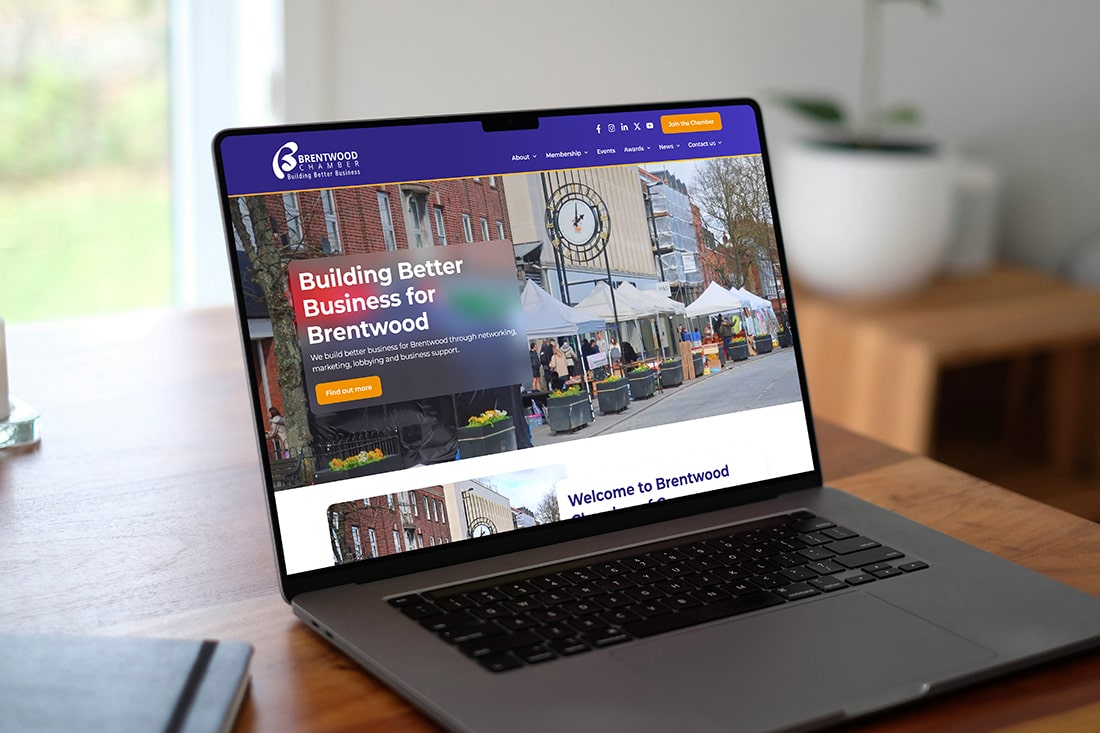
For an Essex service business, it can be useful to combine strong core service pages with selected location pages for the areas that matter commercially. Those pages should be written for real customers, not just search engines. Include relevant services, examples of work, testimonials and clear information about the areas covered.
Competition around London commuter towns can also mean visitors compare several suppliers quickly. Trust signals therefore matter. Reviews, case studies, professional photography, accreditations, clear pricing information where appropriate and fast enquiry routes can help a local business stand out.
Warwickshire has a different mix of markets, from larger commercial centres and industrial areas to affluent towns and rural businesses. A company may want to target Warwickshire as a whole while also prioritising Rugby, Warwick, Stratford upon Avon, Nuneaton or other specific locations.
For businesses covering a wide area, website structure becomes particularly important. Rather than trying to rank one homepage for every service and every town, a designer can create a logical hierarchy of core service pages supported by useful regional content. This also makes the website easier for visitors to navigate.
Warwickshire businesses with customers across the Midlands may need to think beyond purely local SEO. If you regularly work in Coventry, Birmingham, Northamptonshire or the wider region, your website should communicate that naturally. The aim is to show genuine coverage and capability rather than artificially inserting place names into every paragraph.
Leamington Spa has a strong mix of professional services, independent businesses, hospitality, technology, creative companies and premium consumer brands. For many of these businesses, visual presentation carries particular weight. Customers may expect a website to feel considered and modern rather than simply functional.
A Leamington Spa business may also draw customers from Warwick, Kenilworth, Stratford upon Avon, Coventry and surrounding areas. Your website designer should consider whether the site needs to focus tightly on Leamington Spa or position the company across a wider Warwickshire and Midlands market.
For professional and higher value services, detailed case studies can be especially effective. They allow potential clients to understand the problem you solved, your approach and the outcome. This is often more persuasive than a generic gallery of work. Strong photography and concise, confident copy can also help communicate the quality of the business before a visitor makes contact.
↗ SEARCH VISIBILITY
For a business that depends on local enquiries, the answer is usually yes. Your designer does not necessarily need to provide a full monthly SEO campaign, but they should understand how design and development decisions affect search performance.
Local SEO begins with a technically sound website and clear page structure. Your name, services and locations need to be understandable to both visitors and search engines. Your Google Business Profile, reviews and local citations also contribute to visibility, but the website remains an important destination for people deciding whether to contact you.
A designer should also protect existing search performance during a redesign. If an established page is removed or its URL changes without a redirect, rankings and referral traffic can be lost. Before replacing an existing website, make sure the designer reviews current URLs and creates a redirect plan where necessary.
! RED FLAGS
A project usually moves faster when you can provide clear information at the beginning. Start with a list of your services, the areas you cover, your preferred contact methods and the main action you want visitors to take. Gather your logo files, brand guidelines, photographs, testimonials, accreditations and any existing marketing materials.
If you already have a website, provide access to relevant analytics and search data if available. This can reveal which pages receive traffic and which search terms already bring visitors to the site. A redesign should build on useful existing performance rather than treating the old website as if it contains nothing of value.
It is also helpful to identify two or three websites you like and explain why. Focus on specific elements such as spacing, navigation, typography, imagery or page structure. Your designer can use these references to understand your preferences without simply copying another business.
One of the most common reasons website projects stall is missing content. Design and copy need to work together. A beautifully designed page cannot compensate for vague explanations of your services, and excellent copy can be weakened by a cluttered layout.
Good website content answers the questions a potential customer is likely to have. What do you offer? Who is it for? Where do you work? Why should somebody choose you? What does the process involve? What evidence do you have? What should the visitor do next?
For local SEO, content also gives search engines context. Natural references to locations, completed projects, service areas and customer needs are more useful than repeatedly forcing the same “website designer near me” style keyword into a page. Search optimisation should improve clarity, not make the writing awkward.
Not necessarily. Many successful website projects are completed entirely online. Screen sharing can actually make design reviews easier because both sides can look at the same page and discuss changes in real time. Email and shared documents also create a useful written record of decisions.
However, some clients prefer an initial face to face meeting, particularly for larger projects or businesses where the designer needs to understand a physical premises, product range or team. If this matters to you, include it in your initial search. A designer who covers your region may be able to visit even if they are not based in the same town.
The quality of communication matters more than the meeting format. You should feel that questions are answered clearly, decisions are documented and the project has a defined next step.
Once you have selected a website designer, the project should move into a structured discovery and planning stage. This normally includes confirming the sitemap, functionality, content responsibilities, visual direction and timescale. For a redesign, it should also include reviewing the existing website and identifying anything that must be migrated or redirected.
Design may begin with a homepage or key page concept before the full site is developed. This gives you an opportunity to agree the visual direction early. Once the design is approved, the remaining pages can be built using a consistent system.
Before launch, test forms, links, responsive layouts, cookie controls, analytics, search engine settings and any integrations. Existing domains and email services should also be considered carefully so a website launch does not accidentally disrupt business email. After launch, monitor the site for errors and submit updated sitemap information to search engines where appropriate.
Quote item | Designer A | Designer B | Designer C |
Bespoke design | ✓ / ✕ | ✓ / ✕ | ✓ / ✕ |
Mobile optimisation | ✓ / ✕ | ✓ / ✕ | ✓ / ✕ |
SEO setup | ✓ / ✕ | ✓ / ✕ | ✓ / ✕ |
Copy/content support | ✓ / ✕ | ✓ / ✕ | ✓ / ✕ |
Redirects/migration | ✓ / ✕ | ✓ / ✕ | ✓ / ✕ |
Post-launch support | ✓ / ✕ | ✓ / ✕ | ✓ / ✕ |
If you receive three quotes, they may appear to describe the same website while actually including very different amounts of work. Create a simple comparison based on scope rather than price alone. Check the number and type of pages, whether design is bespoke or template based, whether copy is included, what SEO work is completed, whether migration and redirects are covered and what post launch support is provided.
Also consider who you will actually be working with. A clear, responsive designer who understands your goals can save significant time during a project. Communication has a commercial value, especially when a website needs input from several people in your business.
Finally, look at whether the proposal leaves room for the website to grow. You may not need ecommerce, booking functionality, automation or additional landing pages today, but it is useful to know that the platform and developer can support them later.
My approach is to combine clean, modern website design with practical development and a focus on what the website needs to achieve for the business. That means considering structure, mobile usability, search visibility, calls to action, performance and integrations as part of the project rather than treating them as unrelated extras.
I work with businesses that need straightforward brochure websites as well as more involved WordPress and WooCommerce projects, including integrations and automation. For redesigns, I can also review existing content and website structure so useful pages and search visibility are not unnecessarily lost during the move to a new design.
Although local knowledge is useful, a good working relationship does not need to be limited by county boundaries. I can work remotely with businesses across the UK while still building location focused websites for companies that depend on customers in Essex, Warwickshire, Leamington Spa and other specific areas.
✓ FINAL CHECKLIST
✓ Define the main commercial goal of the website.
✓ Search locally, but do not restrict yourself to the nearest postcode.
✓ Review live portfolio websites on desktop and mobile.
✓ Check that the designer understands SEO fundamentals.
✓ Ask who owns the website and domain after launch.
✓ Confirm exactly what is included in the quote.
✓ Discuss content, photography and branding before design starts.
✓ Ask how an existing site’s URLs and SEO value will be protected.
✓ Confirm ongoing support, hosting and maintenance options.
✓ Choose somebody who communicates clearly and understands your business.
Finding the right website designer is less about choosing the person with the shortest travelling distance and more about finding somebody who understands your business, communicates clearly and can build a website that supports your goals.
If you are comparing local website designers, start with their real work, ask detailed questions about the process and make sure the proposal covers more than appearance alone. Your website should be easy to use, quick, mobile friendly, search friendly and designed around the actions you want potential customers to take.
Louis Websdale provides website design and development for businesses across the UK, with experience supporting local and regional businesses in areas including Essex and Warwickshire. If you are planning a new website or redesign, get in touch to discuss the project, your current website and what you want the new site to achieve.

How to Optimise Your Website for ChatGPT & AI Search
Learn how to optimise your website for ChatGPT and AI search with GEO, structured data, content, technical SEO and strategies to improve AI visibility.

10 Website Mistakes Warwickshire Businesses Should Avoid in 2026
Discover 10 common website mistakes Warwickshire businesses should avoid in 2026, from poor mobile design and slow speeds to weak SEO and conversions.
ChatGPT Ads: The Complete Guide for Businesses in 2026
Discover how ChatGPT Ads work in 2026, including targeting, costs, campaign setup, ecommerce, conversion tracking and AI advertising best practices.